🔧 Mastering Precision How Torque Fluctuation Testing Elevates Mechanical Reliability to New Heights 🚀


In the world of mechanical engineering and industrial innovation, precision isn’t just a buzzword—it’s the backbone of performance. Enter **torque fluctuation testing**, a game-changing process that’s redefining how industries ensure the durability and efficiency of rotating machinery. Whether hysteresis brake ’re designing high-performance automotive systems, aerospace components, or industrial-grade equipment, understanding torque behavior under real-world conditions is no longer optional—it’s essential.
But what exactly makes torque fluctuation testing so revolutionary? Let’s dive into the science, applications, and transformative benefits of this advanced methodology.
---
### The Hidden Challenge: Why Torque Fluctuations Matter
Imagine a wind turbine spinning gracefully under a storm’s force or a car engine roaring to life on a steep incline. These scenarios share a common thread: **dynamic torque loads**. Even the most robust machinery faces unpredictable shifts in torque during operation, leading to wear, inefficiency, or catastrophic failure. Traditional static torque tests fall short here—they can’t replicate the erratic forces machines endure daily.
Torque fluctuations occur due to factors like:
- Variable operational speeds
- Sudden load changes (e.g., machinery jams)
- Thermal expansion in components
- Mechanical resonance or vibrations
Left unaddressed, these fluctuations erode gears, strain motors, and compromise safety. This is where torque fluctuation testing steps in as the ultimate diagnostic tool.
---
### How Torque Fluctuation Testing Works: A Closer Look 🧪
Unlike conventional tests, torque fluctuation testing simulates real-world stress by applying controlled, oscillating torque loads to a system. Advanced sensors and data acquisition systems monitor how components respond over time, capturing critical metrics like:
- Peak torque resistance
- Fatigue thresholds
- Resonance frequencies
- Energy dissipation patterns
Modern testing rigs combine hydraulic or electromechanical actuators with AI-driven analytics to mimic scenarios ranging from gentle sinusoidal waves to chaotic, irregular loads. For instance, an automotive drivetrain might undergo simulations of stop-and-go traffic, while an industrial pump faces rapid pressure surges.
---
### Industries Transformed by Torque Fluctuation Insights 🌍
1. **Automotive \u0026 EVs** 🚗⚡
Electric vehicles demand flawless torque management to balance battery efficiency with acceleration. By testing hysteresis brake and transmissions under fluctuating loads, engineers optimize power delivery, reduce harmonic vibrations, and extend battery life.
2. **Aerospace** ✈️🛠️
Jet engines and helicopter rotors operate in extreme environments. Torque testing ensures components withstand turbulence, altitude shifts, and rapid throttle changes without compromising structural integrity.
3. **Renewable Energy** 🌬️🔋
Wind turbines and hydroelectric generators face natural torque variability. Testing identifies weak points in gearboxes and bearings, preventing downtime in critical green energy infrastructure.
4. **Manufacturing Robotics** 🤖🏭
Robotic arms in assembly lines require precise torque control for repetitive tasks. Fluctuation tests validate their ability to handle sudden payload changes or misaligned parts without errors.
---
### Real-World Success Stories 📈
**Case Study 1: Electric Motor Breakthrough**
A leading EV manufacturer struggled with premature motor failures during rapid acceleration. Torque fluctuation testing revealed hidden resonance frequencies causing insulation cracks. Redesigning the rotor’s magnetic layout eliminated the issue, boosting motor lifespan by 40%.
**Case Study 2: Wind Turbine Reliability**
A renewable energy firm faced frequent gearbox replacements in offshore turbines. Custom torque tests simulating storm conditions exposed lubrication failures under oscillating loads. Upgrading to adaptive lubrication systems cut maintenance costs by 62%.
---
### Why Your Business Can’t Afford to Ignore This Technology 💼
1. **Predictive Maintenance** 🛡️
Identify fatigue patterns before failures occur, slashing unplanned downtime and repair costs.
2. **Design Optimization** 🎯
Use test data to refine materials, geometries, and damping systems for peak performance under stress.
3. **Compliance \u0026 Safety** ⚖️
Meet stringent industry standards (e.g., ISO 1940, SAE J2747) while ensuring operator safety in high-risk environments.
4. **Sustainability Edge** 🌱
Reduce energy waste by minimizing torque-related inefficiencies—a win for both your budget and the planet.
---
### Choosing the Right Testing Partner 🤝
Not all torque fluctuation testing services are created equal. Look for providers offering:
- Customizable test protocols tailored to your operational conditions
- High-speed data sampling (10,000+ Hz) for granular insights
- Multi-axis testing capabilities for complex assemblies
- Post-test analytics with actionable recommendations
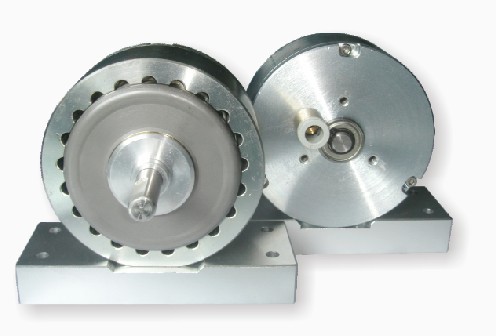
Avoid vendors relying on outdated equipment—cutting-edge results demand cutting-edge technology.
---
### The Future of Torque Testing: AI and IoT Integration 🌐
Emerging trends are pushing torque analysis into the smart era:
- **AI-Powered Predictive Models**: Machine learning algorithms forecast failure risks by cross-referencing torque data with historical performance.
- **Edge Computing Sensors**: Real-time torque monitoring in deployed machinery, enabling instant adjustments via IoT networks.
- **Digital Twins**: Virtual replicas of systems tested under infinite torque scenarios, accelerating R\u0026D cycles.
---
### Final Thoughts: Torque Testing as a Competitive Advantage 🔥
In a market where reliability defines reputations, torque fluctuation testing isn’t just a technical step—it’s a strategic imperative. From boosting product longevity to unlocking new efficiency frontiers, this technology empowers engineers to innovate with confidence.
Ready to harness the power of precision? The next revolution in mechanical reliability starts with a single test.
🔩 **Upgrade Your Testing Strategy Today—Before the Competition Does.** 🔩